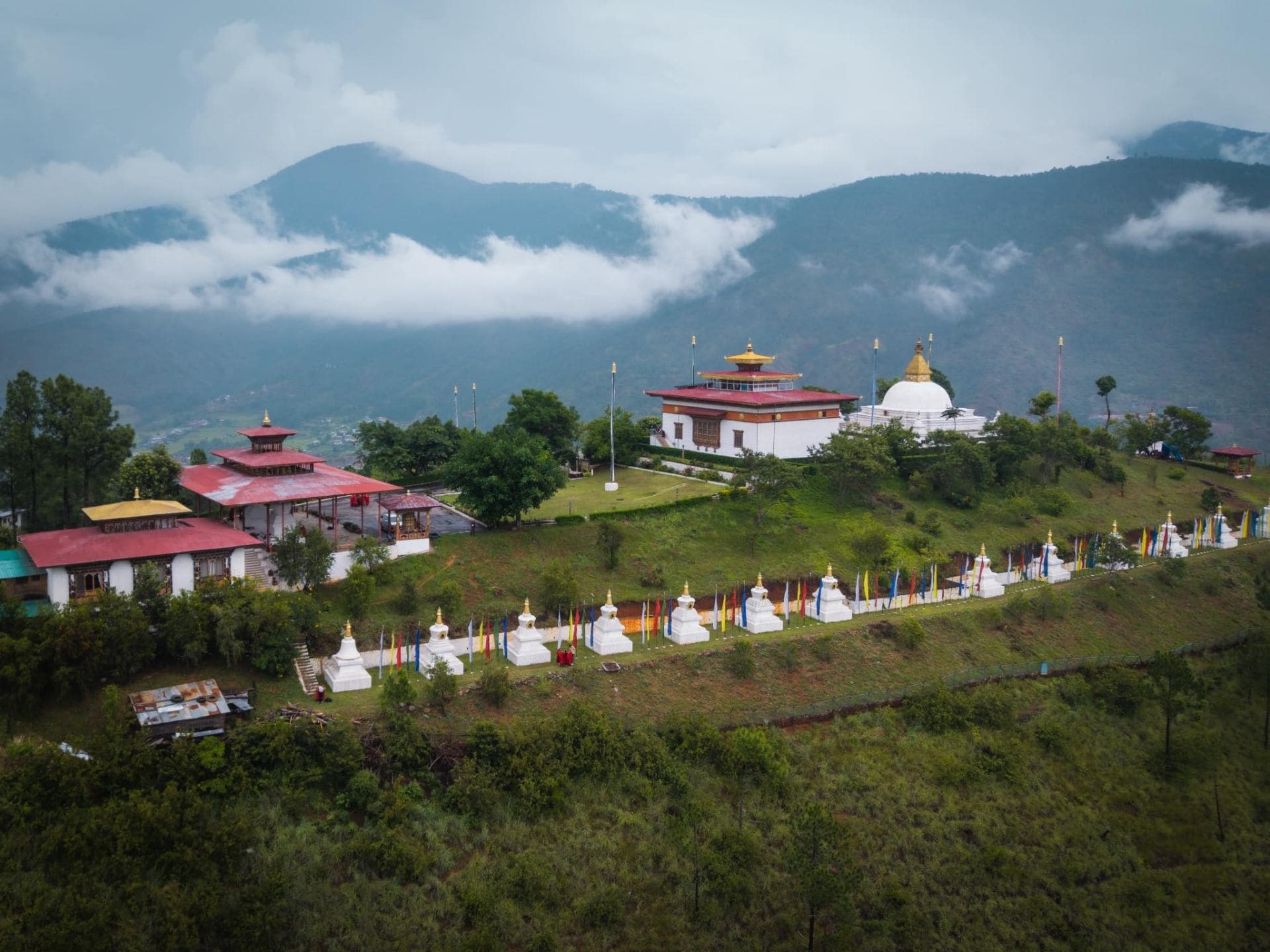
Every country that receives visitors makes a calculation, consciously or not, about what it is willing to trade. Most have decided, through decades of incremental policy and competitive pricing, that volume is the correct answer — that more arrivals, more hotel beds, more coach parks will, on balance, produce more prosperity. Bhutan made a different calculation, and it made it long before the rest of the world began to understand what was being lost.
The Bhutan Sustainable Development Fee is the most visible expression of that calculation. It is also the most misread thing about visiting the kingdom. The fee is not a tax in any sense a Western traveller would readily recognise. It is a philosophical position expressed in the language of economics.
The mechanism and what it does
Since its revision in September 2022, the Sustainable Development Fee stands at USD 200 per person per night for most international visitors. The number matters less than what it does. The contribution goes directly into Bhutan's consolidated fund, where it is directed toward free healthcare for all citizens, free education from primary school through university, and the conservation programmes that have kept more than seventy percent of the country's land mass under forest cover — a constitutional requirement, not a distant aspiration.
This is not a resort fee. It is not an entry ticket to a national park. It is a contribution to the maintenance of a way of life that the kingdom has decided is worth protecting from the pressures that erode it elsewhere. The guest who pays the Sustainable Development Fee is not simply purchasing an experience. They are participating in an arrangement that Bhutan has extended, selectively, to a limited number of visitors each year — an arrangement premised on the understanding that some things are worth more than what they cost to produce.
A doctrine with a name, and a conviction behind it
Bhutan's approach to tourism has a formal name: high value, low volume. It predates the current fee structure by decades. The original daily tariff system, introduced cautiously in the 1970s when the kingdom first opened its doors to outside visitors, was built on the same principle — that a destination's value is not demonstrated by how many people want to come, but by what the place retains for those who do.
The phrase has been adopted in recent years by luxury operators and destination marketers across the world as a kind of aspiration. In Bhutan it is policy. The difference between those two things is the difference between positioning and conviction. The Sustainable Development Fee is the instrument through which conviction is maintained year after year, regardless of the revenue that a looser policy might generate.
Venice receives more visitors in a single day than Bhutan receives in a month. Bhutan looked at that trajectory early — and refused to become ordinary.
What fourteen centuries of sovereignty teaches you about value
To understand why the SDF makes sense, it helps to understand the culture from which it emerged. Bhutan has maintained uninterrupted sovereignty for over fourteen centuries. It was never colonised, never absorbed into a neighbouring empire, never required to reorganise its institutions around the preferences of an outside power. Its dzongs were not built to impress foreign administrators. Its monastic tradition was not preserved in amber for tourists. Its monarchy was not designed with outside opinion in mind.
A country that was never forced to sell itself cheaply has a different relationship with value than one whose sense of itself was shaped, at some point, by having no choice in the matter. The Sustainable Development Fee is not a defensive measure adopted by a small nation under competitive pressure. It is the natural expression of a culture that has always understood, with considerable precision, what it is worth — and what it is not prepared to sacrifice to become more accessible.
The last Himalayan kingdom does not need to make itself easier to visit. It needs only to decide how many visitors are worth receiving, and at what terms.
What the guest actually receives
The SDF is sometimes framed, in practical travel writing, as an obstacle — a cost to be managed before the journey can begin. This framing is entirely wrong. The fee is, among other things, a guarantee.
It guarantees that the monastery you visit in the Paro valley will not have a queue forming at its entrance. It guarantees that the farmer whose home you enter for lunch has not become accustomed to thirty such visits a day, each one a little more transactional than the last. It guarantees that the country you move through has not been worn down by its own fame — has not developed, in the way that certain celebrated destinations eventually do, the glazed quality of a place that has been looked at too many times by people who do not fully see it.
For the traveller who arrives understanding this, the SDF is among the more meaningful expenditures they make. Not because of what it purchases in the conventional sense, but because of what it preserves. A journey through Bhutan is private in a way that money alone cannot buy elsewhere. It is private because Bhutan has structured it that way, at a national level, long before any individual guest makes a booking.
The complete picture of cost
It is worth being precise about what travel to Bhutan involves, because the conversation is often incomplete. The Sustainable Development Fee applies per person per night for the duration of a stay. A journey of ten nights for two travellers means USD 4,000 directed into Bhutanese healthcare, education, and conservation before any other cost is considered.
To that, a guest adds accommodation which, at the level at which Bhutan is best experienced, means properties that are among the more considered in Asia. They add a fully licensed private guide and driver, private transfers, and the itinerary that a thoughtful operator has spent considerable time designing around the specific needs and interests of that particular traveller. Nothing discounted. Nothing compromised.
The complete cost of a private journey through Bhutan, done properly, is substantial. It is also, for those who understand what they are paying for, entirely coherent. The cost is the point. The cost is precisely what makes the experience possible.
The question worth asking before you book
The most useful question a prospective visitor can ask is not how to reduce the cost of travel to Bhutan, but whether the journey they are considering will deliver what that cost implies. An operator who discounts on accommodation, on guiding, on the quality of what is arranged on your behalf is making a statement about what they believe the journey is worth. That statement deserves careful examination.
Bhutan has built its entire visitor model on the principle that the experience should justify every part of what it costs — not that it should be made to cost less. The traveller who arrives understanding this tends to recognise, somewhere in the Punakha valley or on a high trail above Paro, that the calculation was correct all along.
We keep our numbers small because Bhutan asked us to.
Ogyen & Co is a fully licensed private luxury operator based in Thimphu. We design bespoke journeys for a small number of guests each year — the conversation begins by arrangement only.
Begin a correspondence