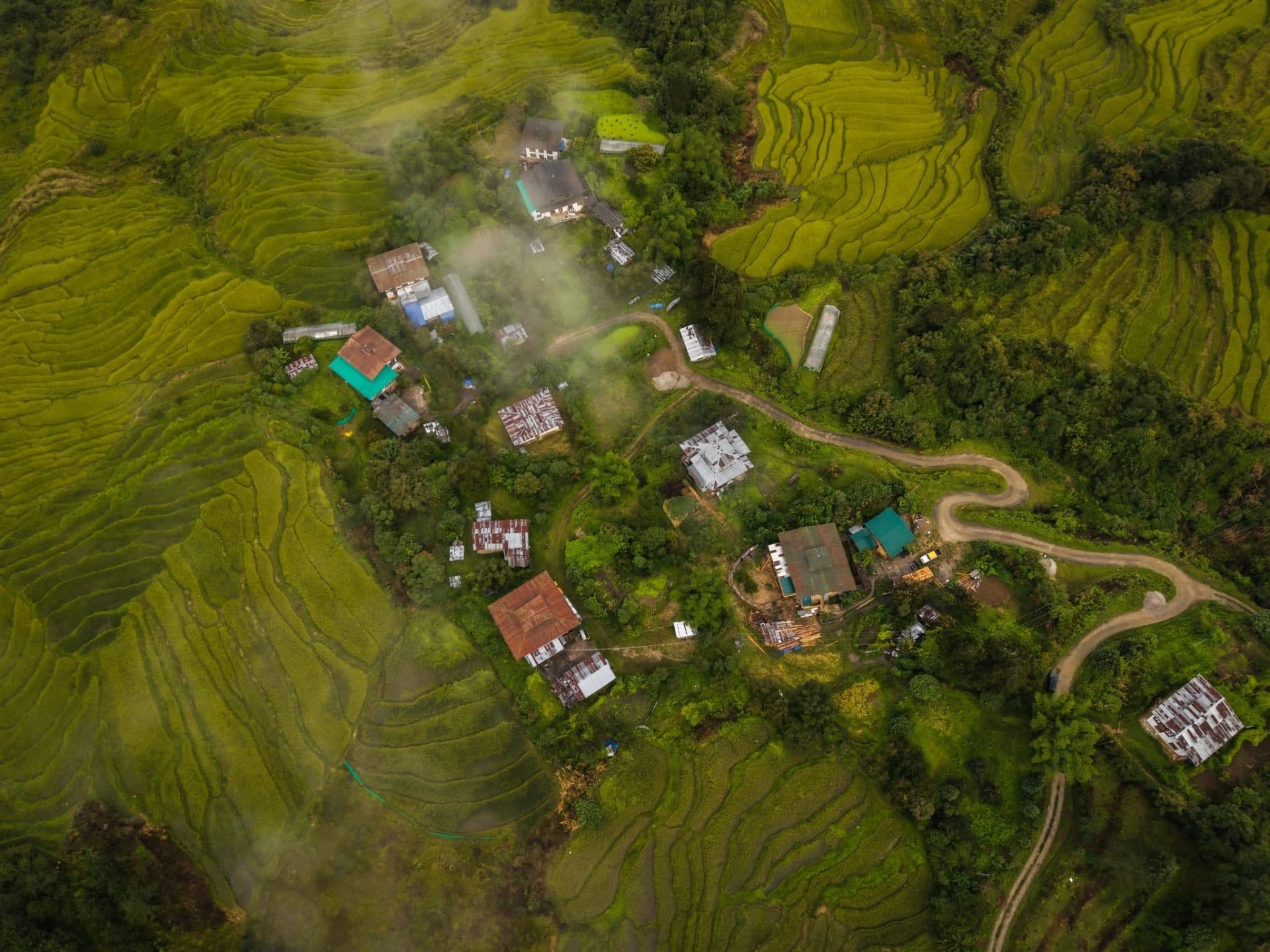
There is a rhythm to Bhutan that does not announce itself immediately. The traveller who arrives for seven days will see the country's most celebrated places, be moved by its landscapes and its dzongs, and leave with photographs that do justice to the scenery. They will also leave, if they are honest, with a feeling that they arrived at the edge of something they did not quite reach. The country was present. They were, in some subtle way, still in transit.
This is not a failure of the itinerary. It is the nature of Bhutan. A ten day itinerary, or twelve, or fourteen, does not simply add more sights to the same experience. It makes a different experience possible altogether.
The Difference Between Touring and Inhabiting
Most destinations reveal themselves in their highlights. The Colosseum, the souk, the great reef. You see the thing, it is as extraordinary as described, and you carry it home. Bhutan is not organised that way. Its most significant qualities, the pace of life in a farming valley, the atmosphere of a monastery during morning prayer, the quality of conversation with a guide who has decided you are ready to hear something real, are not located in the highlights. They accumulate.
The traveller who spends twelve days in Bhutan begins, somewhere around the third or fourth morning, to feel the country rather than observe it. The altitude has settled into the body. The eye has adjusted to a landscape without advertising, without the visual noise that accompanies most modern travel. Something quieter becomes available.
The traveller begins, somewhere around the third or fourth morning, to feel the country rather than observe it.
What a Longer Journey Makes Possible
A seven-day journey in Bhutan typically covers Paro, Thimphu, and Punakha, with perhaps a day in Gangtey if the timing is right. These are the right places to begin. They are not the whole story.
With ten days, the itinerary can breathe. Bumthang, the spiritual heartland of the kingdom, becomes reachable without the compression that reduces it to a single overnight. Bumthang rewards slowness. Its four lateral valleys, each with its own monasteries and its own character, cannot be understood in an afternoon. The traveller who spends two nights there instead of one begins to understand why Bhutanese consider it the most sacred corner of the country.
With twelve or fourteen days, eastern Bhutan enters the conversation. This is the Bhutan that most visitors never reach, not because it is difficult to access but because the compressed itinerary does not permit it. The east is where the old kingdom feels most intact, the monasteries least visited, the festivals least observed by foreign travellers. It requires time, and it repays that time without calculation.
The Guide Relationship Changes Everything
There is something else that a longer journey makes possible, and it is harder to name in an itinerary. The relationship with a guide deepens over days in a way it cannot over hours.
A good guide in Bhutan is not a presenter of facts. They are a translator of a culture that is genuinely different from any other, one that has maintained uninterrupted sovereignty for over fourteen centuries and has never been asked to make its traditions legible to an outside audience. That translation takes time. The guide who is with you on day one is performing a role, graciously and well. The guide who is with you on day eight has learned what you are actually curious about, what moves you, what you are ready to understand.
This is the part of the journey that does not appear in the itinerary document, and it is often the part that guests remember most completely.
Against the Compressed Itinerary
The pressure toward shorter journeys is real and understandable. Time is the scarcest luxury. But there is a particular loss in applying the logic of efficiency to Bhutan, a country that organised its entire national philosophy around the proposition that wellbeing and productivity are not the same thing.
Gross National Happiness, the framework by which Bhutan measures its own progress, is not a tourism concept. It is a governing principle, and the traveller who rushes through the country in seven days is, in a small irony, importing the very set of values that Bhutan has most deliberately refused. Nothing discounted, nothing compromised applies to time as much as it applies to anything else.
The guest who stays longer does not see more Bhutan. They see Bhutan differently. That distinction is worth protecting.
Arriving Ready
Ogyen & Co designs bespoke private journeys through Bhutan for very few guests each year. When we discuss a journey with a new guest, the conversation about duration is always one of the most important ones. We will never suggest a longer itinerary for its own sake. We will always suggest one when the journey calls for it, and we will tell you honestly why. If you are considering Bhutan and would like to discuss the shape of a journey that fits what you are actually looking for, we welcome correspondence by arrangement only.
We keep our numbers small because Bhutan asked us to.
Ogyen & Co is a private luxury operator based in Thimphu, designing bespoke journeys through Bhutan for very few — by arrangement only, nothing discounted, nothing compromised.
Begin a correspondence