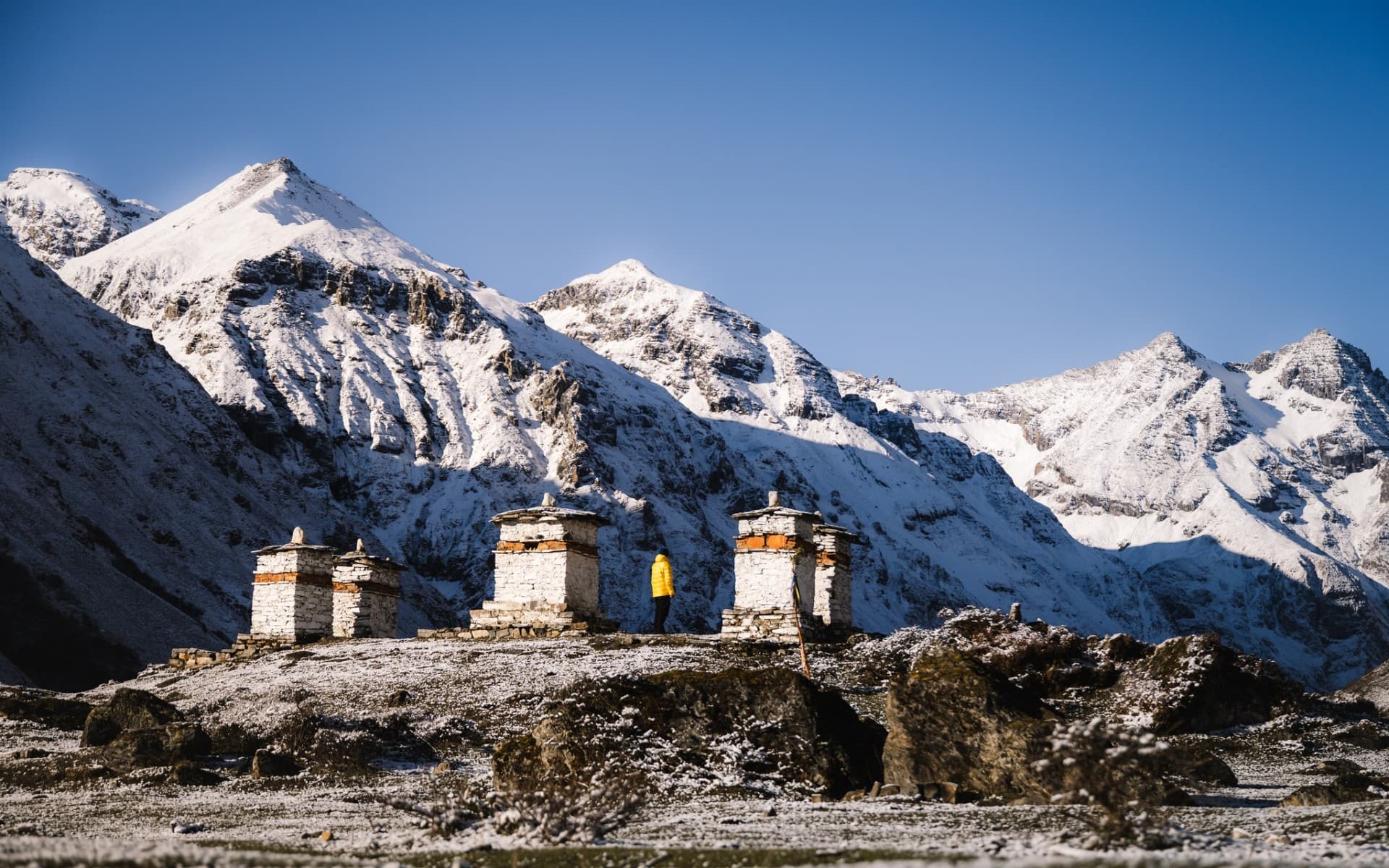
In the luxury travel market, privacy is a product. It is sold as the distinguishing feature of the villa with no other guests, the yacht charter that goes where you choose, the members-only resort whose exclusivity is maintained by a high annual fee and a deliberately small membership. This version of privacy is real in the sense that it delivers what it promises. It is also manufactured: a condition created through exclusion and sustained through spending, dependent entirely on the infrastructure built around it. Remove the booking system, the premium rate, the staff whose job is to keep others out, and it dissolves. Luxury Bhutan travel offers something that cannot be dissolved in this way, because the privacy it provides is not a product of infrastructure. It is a consequence of geography, of deliberate national policy, and of fourteen centuries of a culture that was never asked to perform itself for the benefit of outsiders. That distinction matters more than any feature of any individual property.
How Privacy Is Normally Sold
The architecture of luxury travel privacy is consistent across its major forms. The private island creates separation through water. The members-only resort creates it through a carefully managed admission process and a rate structure that is itself a form of barrier. The villa rental creates it through walls, a locked gate, and the temporary removal of other people from the immediate vicinity. These mechanisms work, and the experiences they produce are genuinely pleasant. What they share is their dependence on an artificial condition: the island is private because someone decided it would be and invested in making it so; the resort is exclusive because the criteria were designed specifically to produce exclusion; the villa is quiet because its surroundings have been deliberately managed.
The condition is always contingent. It can be purchased around by a competitor with sufficient capital. It ends when the infrastructure supporting it is not maintained. It scales imperfectly and franchises badly. Bhutan private travel operates on different principles entirely, and the difference begins not with a property or a rate but with the nature of the destination itself. What Bhutan offers cannot be replicated by a resort developer, a charter company, or a members club, because it is not a service. It is a consequence of history.
What Bhutan's Privacy Rests On
Bhutan received fewer international visitors last year than Venice receives on a single afternoon. That comparison is not a marketing claim. It is a description of a policy in active operation: the Sustainable Development Fee, the licensing requirements governing all inbound operators, the constitutional protections on forest cover and cultural heritage, and the underlying geographic reality of a kingdom whose altitude and terrain have always made mass arrival physically demanding. The privacy available in Bhutan is a consequence of deliberate governmental restraint, of a national philosophy that places the kingdom's integrity above the short-term economics of visitor volume.
This means the traveller who arrives in Bhutan does not need to pay a premium to be left alone. Solitude is the baseline. The monastery courtyard encountered without another visitor is not the product of an early booking or an exclusive tier. It is the normal condition of a place that simply does not receive many visitors. The luxury of Bhutan private travel is the experience of moving through a world that has not been arranged for your convenience, and finding it more interesting for not having been. That is a rarer form of luxury than any villa can provide.
Solitude is the baseline. The monastery courtyard encountered without another visitor is not the product of a booking — it is the normal condition of a place that simply does not receive many visitors.
What Fourteen Centuries Did to This Culture
Bhutan has maintained uninterrupted sovereignty for over fourteen centuries. It was never colonised, never absorbed, never required to adapt its cultural identity or its political philosophy to the demands of an outside power. This is one of the most consequential facts about any country on earth, and it is the philosophical foundation of everything that makes Bhutan feel different from every other destination.
When a culture is colonised, it is asked, often by force, to explain itself in terms a foreign power will accept. It learns to present itself. It develops a performed version of its own identity, shaped partly by what the coloniser found useful and partly by what the colonised community could protect by making it legible to outsiders. This performance, and its long residue, is detectable in the cultural tourism of almost every destination on earth. The guide who has learned to explain the local temple in terms the Western visitor will find accessible. The ceremony adjusted to fall within the tour group's schedule. The cultural object reproduced for sale because the market for it was discovered and developed.
None of this happened in Bhutan. The last Himalayan kingdom refused to become ordinary because no external force ever had the leverage to make it so, and the culture was never asked to perform itself for an audience it had not invited. What the traveller encounters here is not a carefully preserved version of Bhutanese life. It is Bhutanese life, operating on its own terms, receiving the visitor as a guest rather than a customer.
The Monastery, the Courtyard, the Festival
The concrete expressions of structural privacy in Bhutan are specific and, for the traveller who encounters them, unmistakeable. A monastery in the eastern part of the country receives approximately forty serious visitors a year. The monks who live there are not accustomed to being observed. The courtyard in the morning holds the quality of a place that has not been adjusted for an audience. The traveller who stands in it is not experiencing a re-created version of monastic life. They are inside monastic life, as a guest whose presence has been sanctioned by genuine relationship rather than by booking.
The festival in a small valley that no tour group has found. The farmhouse lunch that is a lunch rather than a cultural experience. The path between villages that carries no interpretive signage because no one's interpretation was being solicited. These are not amenities designed to create an impression of authenticity. They are the normal condition of a kingdom that has not installed the machinery of managed experience, because it was never required to. The absence of that machinery is not a gap. It is the point, and it is the thing that no amount of capital investment in any other destination can reproduce.
What the Traveller Who Understands This Finds
The luxury Bhutan travel experience, properly engaged with, asks something specific. It asks the traveller to receive rather than consume, to be present without requiring the world to arrange itself around their preferences, to move through a culture that has not been adjusted for their comfort and to find that version more genuinely interesting than any adjustment would produce.
The traveller who arrives in Bhutan with this understanding is capable of an encounter with a place that most contemporary travel has made structurally unavailable. Not because the encounter has been manufactured for them but because the conditions for it have simply persisted, as they have across many centuries, in a kingdom whose most fundamental characteristic is that it was never asked to change. That persistence is what they are actually paying for. It is worth understanding clearly before they arrive.
We keep our numbers small because Bhutan asked us to.
Ogyen & Co is a private luxury operator based in Thimphu, designing bespoke journeys through Bhutan for very few — by arrangement only, nothing discounted, nothing compromised.
Begin a correspondence