LungtaAn April gathering in BhutanBy Ogyen & Co

A gathering for body, breath and spirit, in the kingdom that measures happiness.

The First Gathering

14–21 April 2027

Thimphu, Punakha, Paro

Only twelve guests. By application.

Eight quiet days. One full moon. Leave lighter.

Apply for 2027

Most of the year, we live at the speed of the next thing. The message, the meeting, the plan after the plan. Somewhere in all of it, the part of us that simply notices goes quiet.

In April, rhododendrons open on the high passes of Bhutan, and a country that measures its progress by happiness rather than wealth makes room for twelve guests. For eight days you keep Bhutanese hours: up before the light, at prayer with a farming family, in silence on a mountain path, beside a fire under the full moon. Nothing is staged for you. You are simply let in.

Eight days will not change your life. They may change what you carry home.

The Name

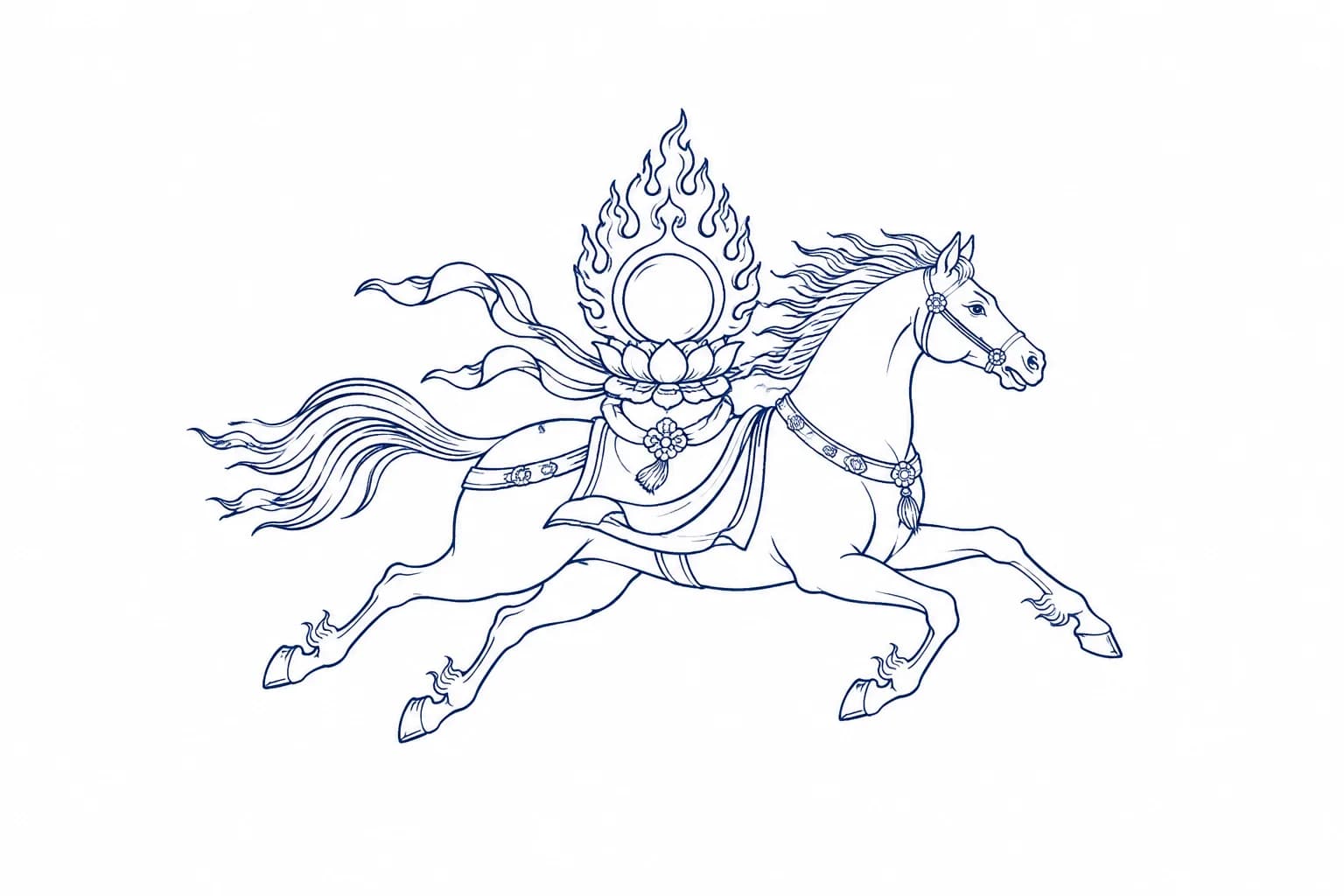
Lungta རླུང་རྟ

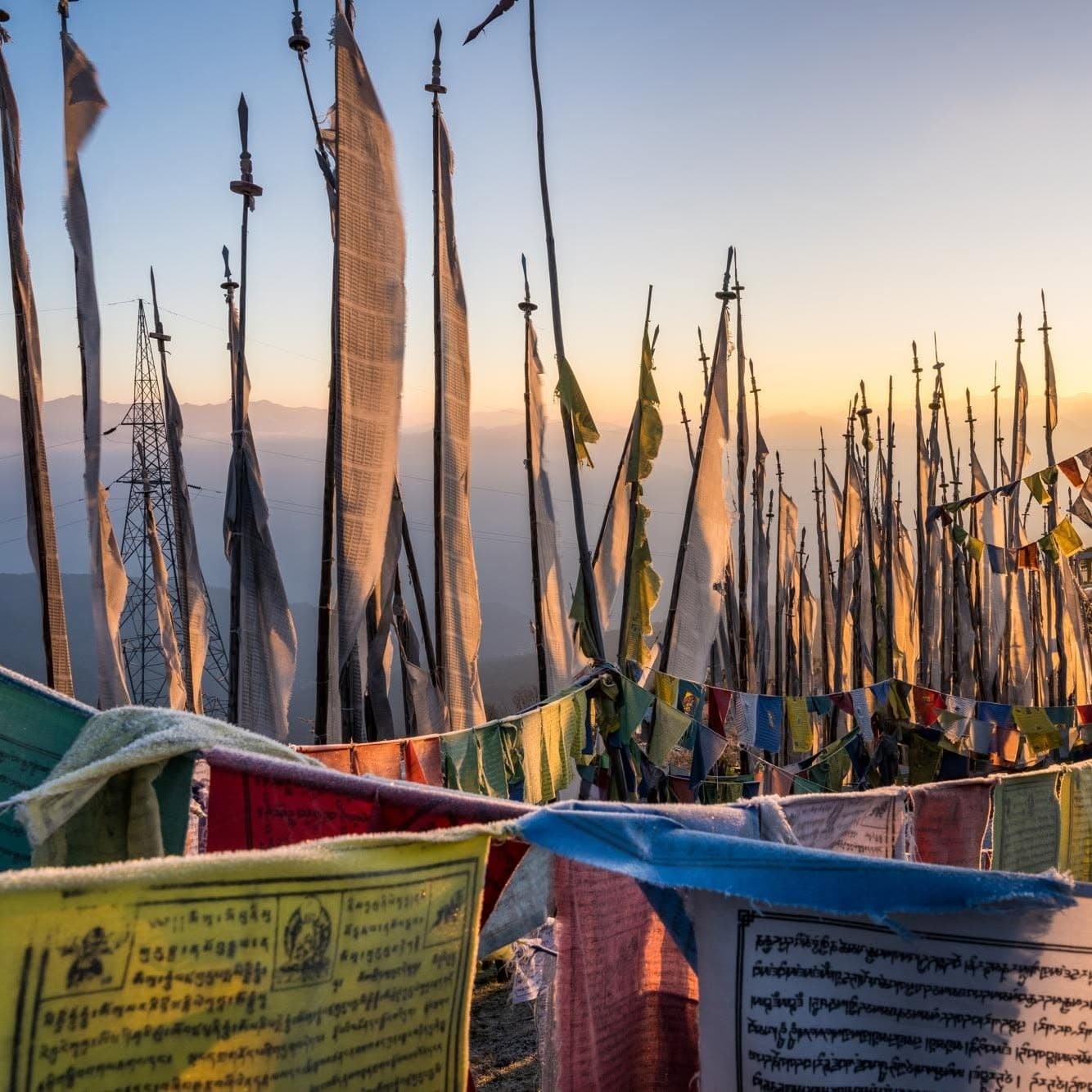
Lung is wind, ta is horse. In Bhutanese astrology, lungta is your own wind: the energy, fortune and steadiness you move through life on. What the West might call resilience, or momentum, or simply feeling like yourself. Everyone knows the season when it runs low. Bhutanese do not wait for it to return. They raise it. They print flags, each one marked at its centre with a horse carrying a jewel on its back. Strung across high passes and river bridges, the flags give their prayers to the wind, and every gust carries them outward to every being it reaches.

That is the shape of these eight days. Yoga and breath at Buddha Dordenma before the city wakes. Meditation in a mountain cave, and drums by the river at dusk. Sound at sunrise on Chele La, nearly four thousand metres up, before you hang the flags you printed with your own hands. A ceremony to open the heart, and, on the night of the full moon, a fire to release what you no longer need to carry. An astrologer reads your lungta. And you go home with it a little higher than when you came.

The Five Colours

Every string of flags runs in five colours, one for each element: yellow for earth, green for water, red for fire, white for air, blue for space. Together they describe everything the world is made of, and the balance between them.

Lungta follows the elements one year at a time, rising from earth toward space.

  1. Earth seal, 2027

    2027 · Earth

  2. Water seal, 2028

    2028 · Water

  3. Fire seal, 2029

    2029 · Fire

  4. Air seal, 2030

    2030 · Air

  5. Space seal, 2031

    2031 · Space

The first gathering is Earth: clay, beginnings, solid ground. Those who return find a different element waiting, the same gathering seen in a new light.

In 2032 the cycle returns to Earth, but never to where it began. The flags fade, the clay softens, and the people who stand at the pass will not be the ones who stood there before. Only the shape returns. What you set in motion on one turn of the wheel, the kindness you carried home, the habit you began, waits to meet you on the next. Bhutanese call this ley jumdrey: cause and effect. You might simply call it coming back.

What you make, and let go

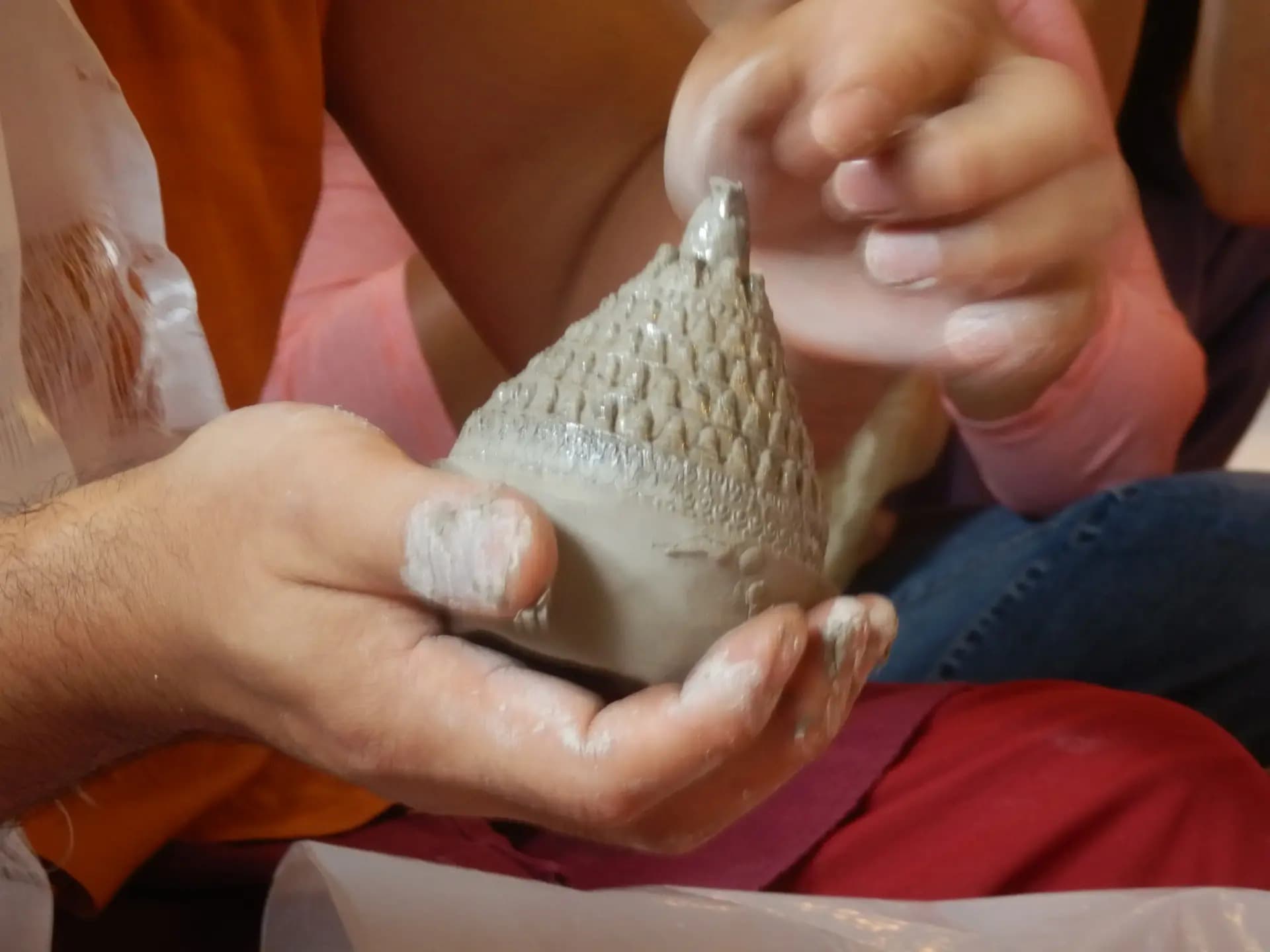
Hands shaping a freshly pressed tsa-tsa, a small clay stupa

Tsa-tsa

the clay offering

On the first afternoon a lama shows you how to press a tsa-tsa, a small stupa of clay, and you seal a written intention inside it. It sits on the altar through every session that follows. On the seventh morning you carry it to Taktsang and leave it in a niche in the cliff, where rain and wind return it to the earth. Bhutanese have done this for centuries.

Frost-edged prayer flags on tall poles at dawn on a high pass

Lungta

the wind horse

On the fifth evening you print your own prayer flags from carved wooden blocks, each with a line of your own. The next morning, after sound at sunrise on Chele La, you hang them at the pass. They fade over the months that follow. That is the point of them.

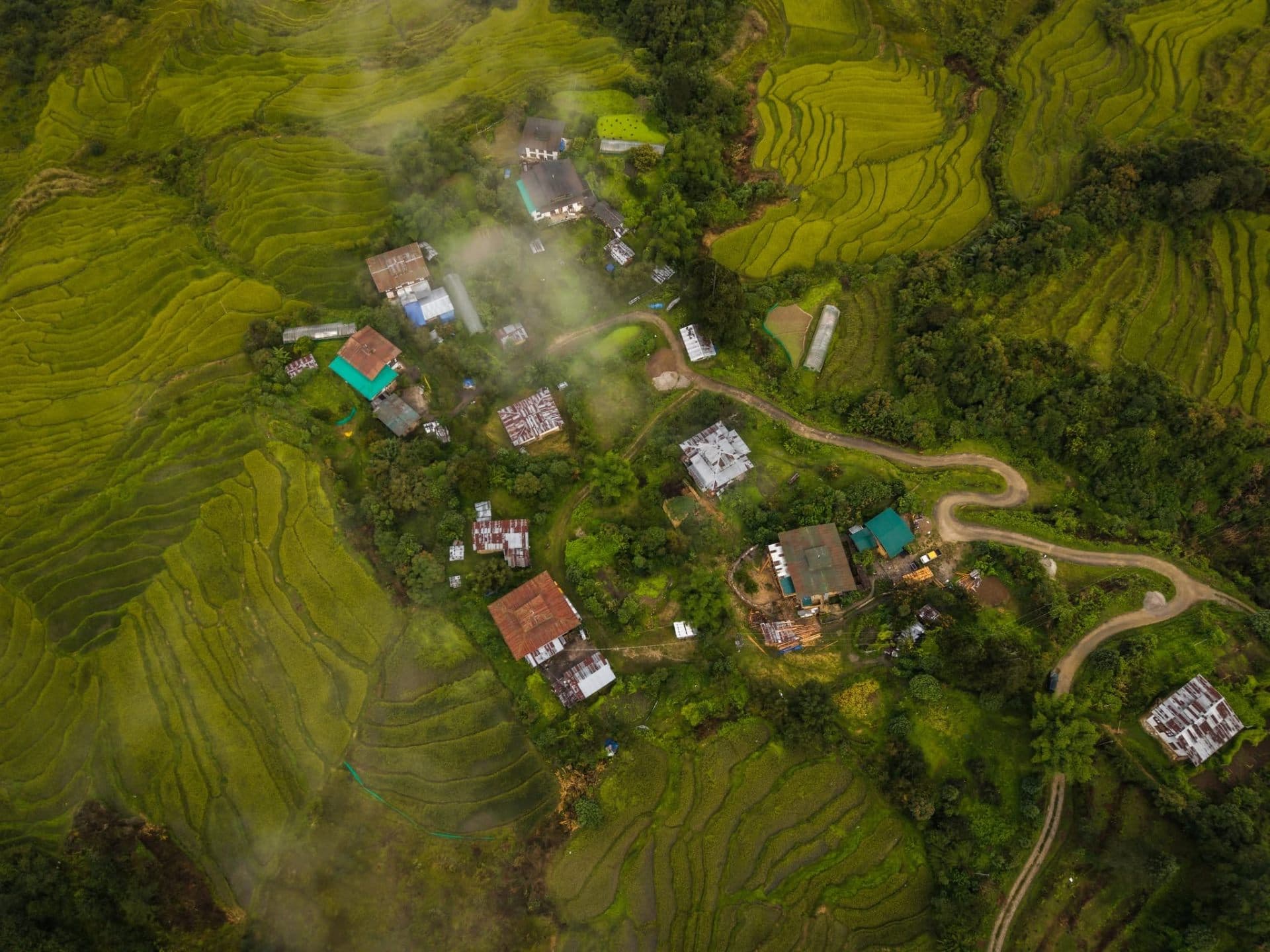
Farmhouses among green terraced fields in Bhutan

A gift from home

the exchange

Before you leave home, choose one object that carries a story. Not a souvenir. On the fourth day, at a farmhouse in Punakha, you tell its story and give it away, and you are given something in return by someone whose life you did not know a week before.

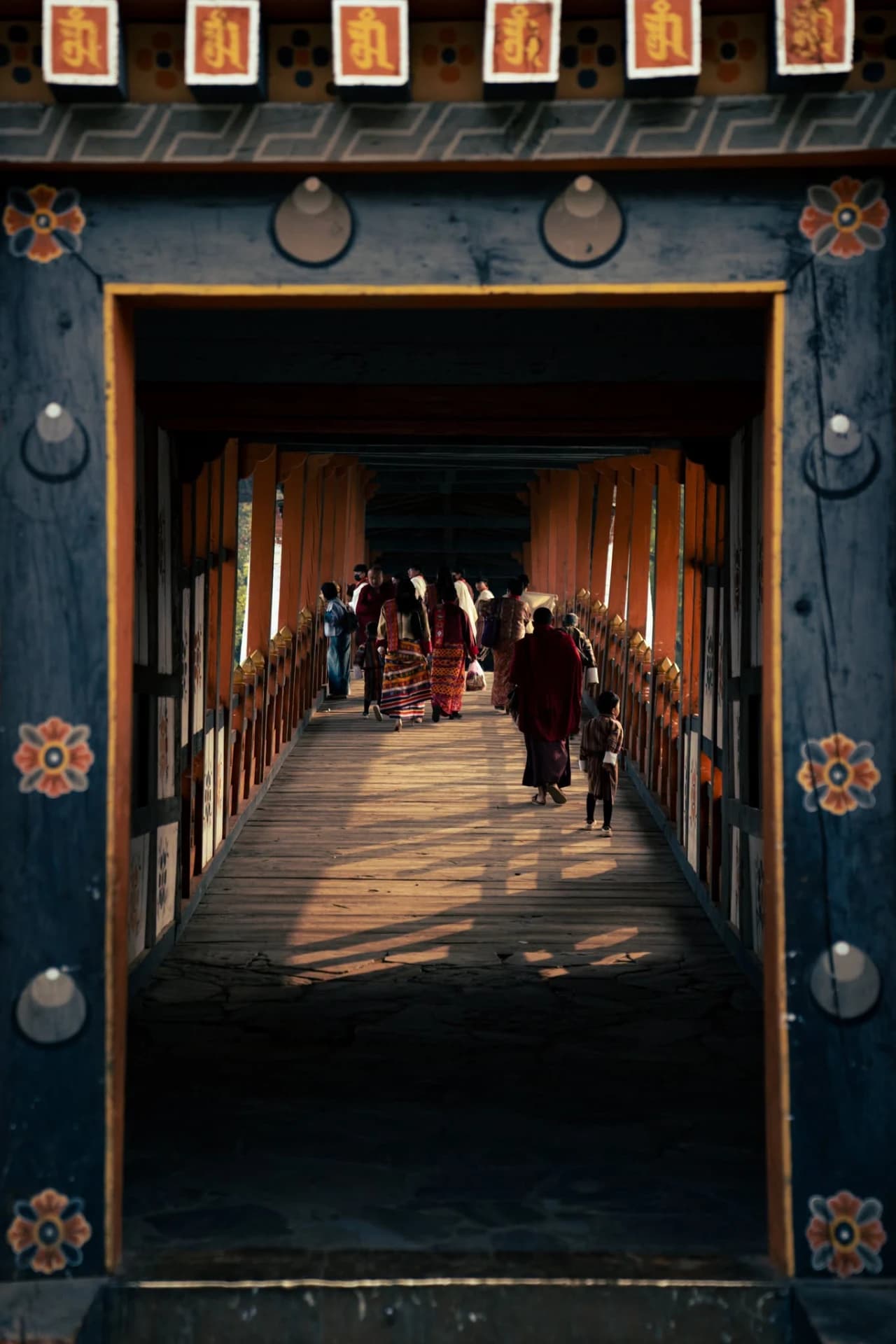
A monk in maroon robes and a child walking with others along a sunlit covered wooden bridge

What remains


Everyone arrives carrying something. Worry, noise, a year that asked too much of you. Over eight days you set it down three times: in clay, in cloth, and in the hands of someone you have only just met. What remains is lighter, and it is not meant to be kept. It is meant for the people waiting for you at home.

Eight days

Thimphu, then a working farmhouse in Punakha, then Paro. Each morning begins before the light and each evening ends in a circle.

  1. Arrival

    Wednesday 14 April · Paro to Thimphu

    A lhabsang, the smoke offering, to welcome you. In the afternoon you press your tsa-tsa with a lama: a small stupa of clay, made by hand, with a written intention sealed inside it. What you write is yours to choose — something you are carrying, or something you have been meaning to set down. It stays with you through the week, and on the last mountain walk you leave it where rain and wind will take it back to the earth. In the evening the group sits together for the first time, and singing bowls close the day.

  2. Thimphu

    Thursday 15 April

    Yoga and pranayama at Buddha Dordenma before the city wakes. A pulse reading with a drungtsho, a physician of Sowa Rigpa, Bhutan's traditional medicine. A kora around the Memorial Chorten among people who walk it daily. In the evening a Buddhist master speaks on impermanence.

  3. To Punakha

    Friday 16 April

    Meditation in a mountain cave. A walk through rice fields to Chimi Lhakhang. Drums by the Mo Chhu at sunset. At the farmhouse you hand in your phone at dinner and end the day gazing at a butter lamp.

  4. A day without

    Saturday 17 April · Punakha

    No phone. Prayers with the family at dawn, yoga in the courtyard, work in the fields and the kitchen. In the afternoon a few Bhutanese friends join by invitation, and everyone gives away the object they brought. A menchu, the hot stone bath. A fire in the evening, and songs with the family.

  5. To Paro

    Sunday 18 April

    Your phone back at breakfast. Yoga in the courtyard and a short talk on its philosophy. Punakha Dzong and the long suspension bridge, then the road west. In the evening you print your prayer flags.

  6. Chele La

    Monday 19 April · Paro

    Sound at sunrise at nearly four thousand metres, then your flags hung at the pass. Then the walk down through forest to Kila Nunnery, taken in silence, with no one on the path but the group. In the afternoon, a private reading with an astrologer. In the evening, a ceremony of the heart and yoga nidra.

  7. Taktsang

    Tuesday 20 April · full moon

    The climb to Taktsang, unhurried. Your tsa-tsa left in the cliff. A picnic on the way down. In the evening, intentions for the way home, then a fire ceremony under the full moon to release what you no longer need to carry, and a farewell dinner with traditional performance.

  8. Departure

    Wednesday 21 April

    A last practice if your flight allows, then the airport.

Request the full itinerary

Includes daily timings, teachers and the full detail of each day.

The people who hold it

Every session is led by Bhutanese hands: teachers of yoga and sound, a lama, a Buddhist master, a physician of Sowa Rigpa, an astrologer, and the family whose farmhouse becomes home for two nights. None of them work in tourism by trade. On the fourth day, a small number of Bhutanese friends join us by invitation.

Who Lungta is for

Anyone. A surgeon, a teacher, a founder, a painter, someone between chapters of their life. No practice is needed and no belief is asked of you, only a willingness to arrive as you are.

Come alone, as a couple, or with the friends you have always meant to travel with. Whoever you arrive with, you will share a circle, a farmhouse table and a silent walk down from Chele La with people you did not know before. By the full moon they are no longer strangers, and some of what begins here will last well beyond these eight days.

In Bhutan, the oldest wish is a simple one: that every being be happy, and free from suffering. For eight days we live inside that wish, rising early, walking slowly, sitting in silence beside people we did not know a week before. What you bring home is not a technique. It is a gentler way of meeting your own mind, and a little more kindness to carry to the people who are waiting for you.
Choose your room

The whole group stays together at two of Bhutan's finest five-star properties: Pemako Thimphu and COMO Uma Paro. Choose your room.

Limited to 2 rooms

Signature

Twin share · USD

$7,900

per person

Single room · $12,500

The finest suites at both properties, for those who want the most space and privacy.

Enquire

Most chosen

Premier

Twin share · USD

$5,400

per person

Single room · $7,900

Spacious suites at both properties, with room to settle in after each day.

Enquire


Classic

Twin share · USD

$4,650

per person

Single room · $6,500

Beautifully appointed rooms at both properties.

Enquire

Every guest shares the same journey: all sessions, meals, transfers and experiences are identical across packages. Only your room differs.

Different rates apply for Indian nationals. Write to us and we’ll send them.

Travelling solo on Classic? We can pair you with another guest of the same gender to share a room at the twin-share price.

Included

All accommodation and meals. Every session, ceremony and private reading on the programme. The Sustainable Development Fee. Your Bhutan visa. A private guide and vehicle throughout. Materials for the tsa-tsa and prayer flags. All entrance fees. Airport transfers.

Not included

International flights to Paro. Travel insurance, which must cover helicopter evacuation. Drinks beyond those with meals. Gratuities.

What to bring

One object from home that carries a story. Choose it slowly; it is the first part of the gathering.

Then: layers for nights near freezing and afternoons near twenty degrees, shoes that have walked a mountain path before, a shawl for temples, and nothing you would mind being without for a day.

Apply for the first gathering

Applications close on 28 February 2027. It takes a minute. We read each one and reply ourselves.

How many of you?
Where would you like to stay?
Room

Accepted guests receive a letter by post before the gathering.

Questions

Do I need to be Buddhist, or experienced in yoga?

No. You need to be willing to take part. Teachers adjust every session to the room.

How hard is the walking?

Taktsang is about three hours up and two down, climbing roughly 900 metres. Chele La sits near 4,000 metres, and the silent walk down to Kila Nunnery takes around two hours. Both come late in the week, after your body has adjusted.

What if the weather closes Chele La?

The sound session moves to Dochula, lower and sheltered, the same morning.

Can I come alone, or with others?

Either. Guests come alone, in pairs and with friends. You share every meal, circle and walk, and rooms can be shared or kept to yourself.

What is the difference between A, B and C?

Only where you sleep in Thimphu and Paro. Everything else, every session, meal, guide and ceremony, is the same for everyone.

What about food?

Meals are Bhutanese and fresh. Vegetarian and other needs are arranged ahead; tell us on the application.

How do I get to Bhutan?

By air into Paro, from Bangkok, Delhi, Kathmandu, Singapore and a few other cities. We arrange your visa once your place is confirmed.

Why only twelve?

Because a circle larger than that stops being one.

The 2028 gathering, Water, opens to applications in September 2027.

PRIVATE ENQUIRY